
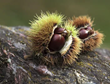
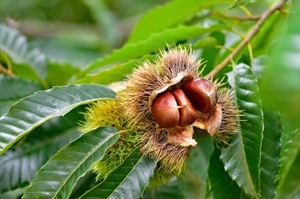
Katus is found in hills and sub-tropical forest areas of Nepal which has traditional, ecological and cultural significance. It is also known as patle katus or dhale katus. This native chestnut species is a beloved part of Nepali nature, cuisine, and tradition. It is also popularly used in Tihar festival to give to your brother and sisters. In other countries it is called as Chinquapin or Chinkapin (English), Katia (Myanmar), Ko (Laos), Kata (Malaysia), Berangan (Indonesia) in various part of the world.
Plant Characteristics
Katus is an evergreen tree that can grow up to 30 m tall. It belongs to the Fagaceae family, which includes oaks and chestnuts. The tree has a dense, rounded canopy with thick, leathery evergreen leaves. It grows at elevations between 1,000 and 2,500 meters and prefers moist, well-drained loamy soil. The tree is common in Nepal’s mid-hill regions, particularly in mixed forests with other native species.
Cultural Significance
Katus is an essential part of the Tihar festival in Nepal. During Tihar (particularly Bhaitika), Katus nuts are traditionally included in the festival offerings alongside other items to the brother and sisters. The plant also holds spiritual significance in Kirat Mundhum and Khambu culture. Katus leaves and twigs are believed to ward off evil spirits and purify people during illness or difficulty.
Nutritional and Medicinal Benefits
Katus nuts are highly nutritious rich in carbohydrates, fats, and proteins, and contain essential minerals such as calcium, magnesium, and iron. In traditional medicine, Katus is used to treat colds, coughs, and digestive problems.
Beyond food, Katus leaves are used as animal fodder for goats, cows, and buffaloes. The hard wood is used for timber and construction purposes, while the tree also provides firewood for fuel. Katus represents Nepal’s rich plant diversity and is one of many wild, indigenous, and under-exploited fruits in the country.
More indigenous fruits: 24 Local wild fruits of Nepal: Identification & conservation – Think Like A Plant
Ayurvedic value: कटुस पात्ले, Chesnut, Kattus, Castanopsis bystrix