
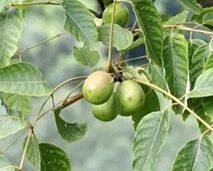
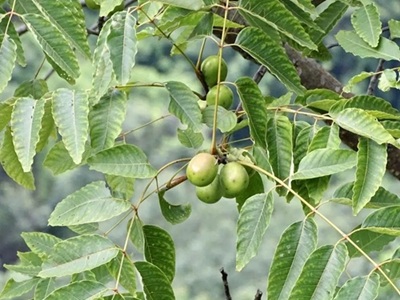
Choerospondias axillaris (Roxb.) locally known as ‘Lapsi’ (लप्सी) in Nepal, is a distinctive indigenous fruit tree highly used in the culinary, cultural and medicinal purpose in mid‑hill communities. This deciduous species, often referred to as hog plum in English, thrives naturally on warm, moist slopes and around homesteads, where farmers value it both as a fruit crop and a multipurpose tree. Its fruits are renowned for their intensely sour taste and high vitamin C content, making lapsi a unique ingredient in Nepalese kitchens as well as a promising underutilized resource for rural livelihoods and small‑scale processing enterprises.
Lapsi belongs to the family Anacardiaceae and develops into a medium‑sized tree with a stout trunk, spreading crown and strong taproot system. As the fruits mature, they turn yellowish to brownish, becoming aromatic and characteristically sour, traits that are highly appreciated for processing into pickles and candies.
Lapsi is predominantly distributed in the mid‑hills of Nepal, where it is considered native and is commonly planted or protected near houses, farm boundaries and community forests. Its natural range, however, extends beyond Nepal into parts of South and East Asia, including northern India and southern China, though nowhere does it enjoy the same cultural prominence as in Nepal. Farmers often integrate lapsi into traditional agroforestry systems, where it provides shade, fodder, fuelwood and habitat for birds and small wildlife alongside fruit production, thereby contributing to both household food security and local biodiversity conservation.
Lapsi fruits are harvested at different stages of maturity for diverse culinary preparations. Slightly under‑ripe fruits are sliced and sun‑dried or mixed with salt, spices and oil to prepare intensely sour pickles (achar), while more mature fruits are boiled and pulped for jams, sweet‑sour candies, chutneys and syrups that are popular in urban and rural markets alike.
Lapsi used in traditional Nepalese herbal practice. The fruits, rich in vitamin C and various phytochemicals, are consumed to support digestion, relieve constipation and act as a mild laxative, while their sour pulp is sometimes recommended to stimulate appetite and alleviate symptoms of common cold and fatigue. Modern phytochemical studies have revealed that different parts of the tree including bark, leaves, roots and fruit peel contain diverse bioactive compounds, antioxidants and enzymes associated with antimicrobial, anti‑inflammatory and potentially cardio‑protective effects, lending scientific support to many of its folk uses.
I enjoyed reading about this fruit, it was very interesting. 👋🌺