
Every year, during start of monsoon as the dark clouds roll across the skies of Nepal and the earth drenches in fresh rain, a unique natural transformation takes place. The peaceful, terraced hillsides areas turn into lively fields paddy along with song, dance, and community spirit.
This is the essence of Dhan Diwas (National Paddy Day), also widely celebrated as Asar 15. It is celebrated annually on the 15th day of the third month of Bikram Sambat (Nepali calendar) i.e. Asar (usually late June or early July). Dhan Diwas is not just a celebration of a crop; it is a vibrant tribute to Nepal’s agricultural soul.
Significance of Dhan Diwas
Rice (dhan) is the ultimate staple food for millions in Nepal. It is central to the country’s food security, economy, and culture. Nepalese people consume rice almost every day, we call it Dal Bhat Power 24 Hour 😊. Formally recognized by the government as National Paddy Day since 2004, Dhan Diwas marks the official beginning of the rice-planting season (Ropain). For an agrarian society where a significant portion of the population relies on farming, this day is a hopeful invocation for a prosperous harvest and a year free of food scarcity.
Nepalese people call this day “Mano Khayera Muri Ubjaune Din” that translates to “The day to Eat a handful now, to harvest a massive haul for whole year consumption”
Traditional Customs and Celebrations
If you visit a Nepali village on Asar 15 (Late June, early July), you will find an atmosphere that feels less like hard labor and more like a massive outdoor carnival. Here is how the day traditionally unfolds:
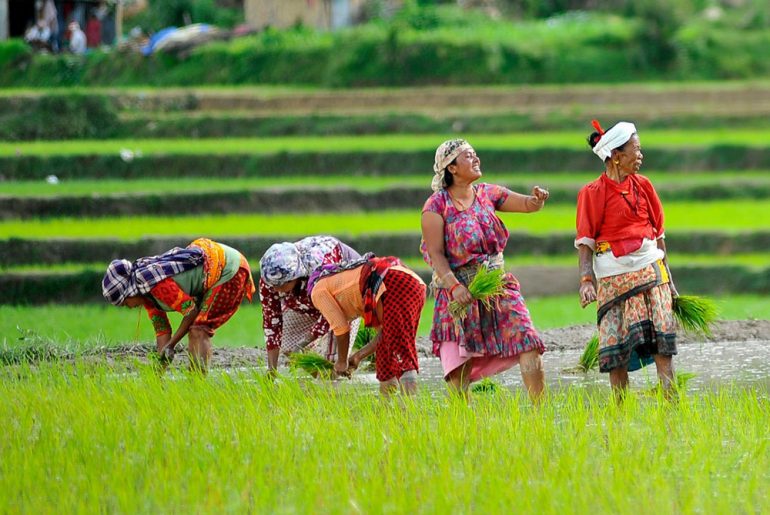
- Ropain (Rice Planting): This event also known as Ropain Jatra (Rice planting festival) where men plow the waterlogged fields using oxen or tractor while women seamlessly plant the green rice saplings deep into the rich, muddy soil.
- Asare Geet: The fields echo with Asare Geet, traditional folk songs sung responsively between groups. These songs narrate the joys, heartbreaks, and daily struggles of farming life, helping the long hours of manual labor pass by effortlessly.
- Mud Splashing (Hillo Chhyapne): Perfection gives way to pure fun on this day. Farmers and visitors alike intentionally splash each other with the fertile mud of the paddy fields. It is a joyful ritual that strips away societal barriers, bringing everyone down to earth.
Nowadays a lot of foreign tourists enjoy this event getting along with locals around Nepal.
The Iconic Culinary Tradition: Dahi-Chiura
You cannot celebrate Asar 15 without eating Dahi-Chiura (Curd and Beaten Rice). Often served alongside fresh mangoes or bananas, this simple dish provides the perfect instant energy boost for working under the monsoon sun and holds deep cultural significance as a wholesome, auspicious food.
Ultimately, Dhan Diwas is a profound reminder of Nepal’s deep-rooted connection to the earth. It brings urban dwellers back to the villages, encourages domestic tourism, and passes down ancestral agricultural knowledge to the younger generation. It highlights a beautiful reality: when nature provides the rain, the community responds with unity, hard work, and a song.