
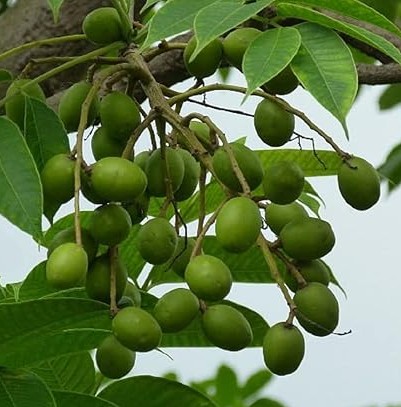
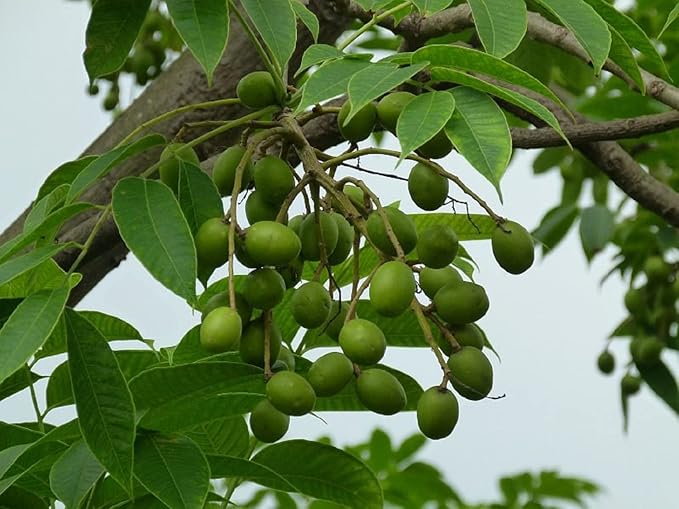
Spondias pinnata, commonly known hog plum and locally called amaro/amara (अमारो) in Nepali, is a deciduous tree belonging to the cashew family (Anacardiaceae). It is also called as “wild mango”. This tree produces edible, sour taste fruits cherished in rural and tribal communities across South Asia. Amaro is a versatile, culturally significant tree that nourishes both body and community. Its sour fruits, medicinal properties, and ecological role make it a true gem of Nepal’s hills and Asia’s forests.
It is known by different names around the globe:
Nepal: Amaro / Amara / अमारो / अमारा
India: Ambara, Amra, Bhringi-phal, Kincam (Tamil), Amate Kaai (Kannada), Ambada, Ambalamu etc.
Others: Aamra (Bangladesh), Amara (Bhutan), Hwei (Myanmar), Kedondong (Indonesia), Binglangqing (China)
Distribution
It is native to the Philippines and Indonesia, now widely found in all over south Asia (India, Nepal, Bangladesh, Sri Lanka), Southeast Asia (Thailand, Myanmar, Vietnam, Cambodia), Southern China and Solomon Islands. It grows well in lowland and hill forests up to 1,200 m.
Medicinal Use
Used in folk medicine for treating:
- Diarrhea & skin infections
- Painful joints, vomiting, gonorrhea
- Earache (fruit juice), Rheumatism & sprain (bark paste)
- Thirst remedy (fruit & root)
- Anti-scorbutic, anti-tubercular, aphrodisiac (unripe fruit)