
Do you know about a shrub that doesn’t just provide shade, but also serves up dinner and fills your medicine cabinet?
That is Crateva unilocularis, a remarkable deciduous plant known casually as the Spider Tree or, quite literally in Chinese, the “Tree Vegetable” and locally as Siplikan, Sliplikan in Nepal and parts of India. Belonging to the Capparaceae family, this unique tree bridges the gap between food, traditional medicine, and ornamental beauty. For generations across Asia, people have looked up into its canopy not just for scenery, but to harvest tender young buds and leaves for the kitchen.
Identification
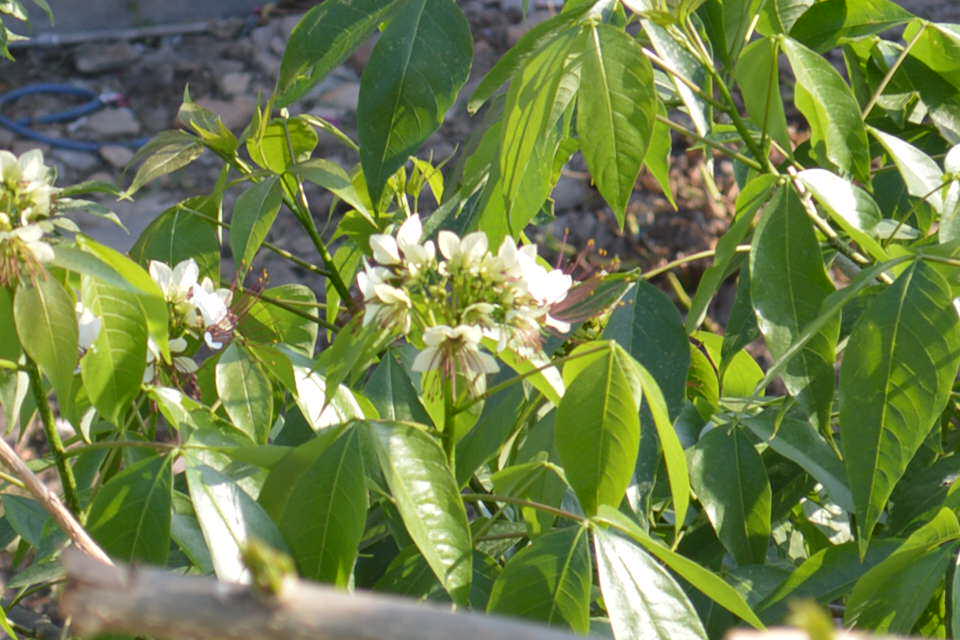
It generally grows into a handsome, wide-spreading tree between 5 to 10 meters tall, though some old-growth specimens can tower up to 30 meters. It features a smooth, grayish-brown trunk and distinctive hollow twigs dotted with sparse white speckles.
Its leaves grow in clusters of three, showing off a glossy, slightly leathery texture. But the real show happens between March and July, when the tree erupts into massive, vividly colored blossoms that hang heavy from the branches.
In the wild, you’ll find it thriving in mixed dry forests, usually hugging stream banks where the soil is moist but well-drained, enjoying everything from full sun to partial shade at elevations up to 1,500 meters.
Where does it grows?
It is native to the tropical and subtropical landscapes of Asia. It has deep roots in India, Nepal, Bhutan, Bangladesh, and Myanmar. In Nepal, it’s a common sight in home gardens and wild forests, particularly around mid hills. It grows widely across southern China (including Yunnan, Guangdong, and Hainan) and stretches into various tropical pockets of Southeast Asia. It has also become a beloved, though exotic, fixture in places like Hong Kong.
Culinary Uses
The star culinary attraction of this tree is its tender young buds and shoots. Because they carry a natural bitterness, locals typically boil and firmly squeeze them out before cooking them up as a standard green vegetable or twisting them into savory pickles.
Traditional & Modern Medicinal Uses
In Traditional Chinese Medicine (TCM) and local indigenous practices almost every part of Crateva unilocularis serves a purpose.
- The Bark & Roots: used as a tonic to break fevers, settle the stomach, and ease urinary complaints. Traditional healers use it to balance bile and phlegm, while root and bark remedies are known to target deep aches and clear “dampness” by activating bodily meridians.
- The Leaves & Juice: Leaf juice is a trusted remedy for kickstarting a lost appetite or soothing a bad stomach ache. Heavy decoctions made from a mix of shoots, roots, and leaves are frequently used to fight off stubborn urinary tract infections.
Scientific backing
Modern research is starting to back up these ancient practices. Phytochemical screenings have confirmed that the leaves are rich in antioxidants. Furthermore, laboratory studies have validated its traditional use as an anthelmintic (anti-parasitic), opening the door for researchers to potentially isolate new compounds to fight parasitic infections.
Why it is important?
Crateva unilocularis is a textbook example of a “functional food”—a plant that nourishes the body while simultaneously healing it. Whether you are a researcher looking to validate traditional remedies through modern phytochemistry, an ethnobotanist studying Himalayan cultures, or simply someone looking for sustainable, nutrient-dense food sources, this tree is a powerful reminder of nature’s multi-tasking brilliance.