
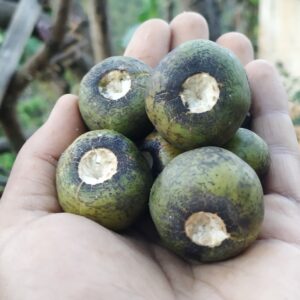


English Name: Indian Wild Persimmon
Local Name: तिजु , Tiju , Teju , Khaltu (Nepali); Gaub , Tendu , Kendu , Temburi , Timburi (Indian)
Scientific Name: Diospyros malabarica (Desr.) Kostel.
Family: Ebenaceae
It is one of the most popular wild fruit of hilly areas of Nepal. It is an evergreen flowering tree native to the Indian subcontinent and southeast Asia (Nepal, India, Bhutan, Bangladesh, Myanmar). The fruit has a sweet and distinct taste after ripening. The bark, leaves, flowers, and fruits are highly used in Ayurvedic Medicine.
The fruit of tiju is edible when fully ripe, although its flavor may range from sweet and persimmon-like to astringent. The unripe fruit contains considerable tannins and is generally more astringent than the ripe fruit.
Nutritional benefits
- Ripe tiju fruit can contribute dietary energy and natural antioxidants.
- Extracts of the fruit, leaves and bark contain phenolics, flavonoids, tannins, saponins and terpenoid compounds.
Traditional digestive uses
- Diarrhea and dysentery.
- Digestive disturbances.
- Excessive intestinal discharge.
- Sore throat and mouth ulcers.
- Aphthae and related oral problems.
See also: 24 Local wild fruits of Nepal: Identification & conservation – Think Like A Plant
All the other names!