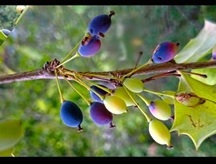

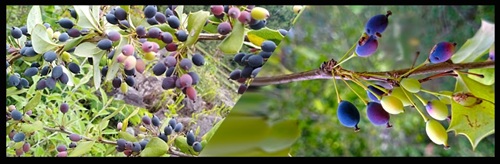
Berberis aristata, locally known as Chutro “चुत्रो” in Nepal. It is a valuable wild Himalayan shrub with edible fruits, prickly leaves and thrones and strong medicinal importance. It is a fitting example of a native plant that supports food, traditional healing, and rural livelihoods in Nepal and across South Asia.
Local and global names
In Nepal, the plant is widely called as Chutro, Kirmada in far west parts, Chautari in western parts and Daruharidra is also commonly used name in medicinal and Ayurvedic contexts. Other names recorded from South Asia include Indian barberry, Tree turmeric, Daruhaldi, Darvi, and Chitra. In English-language sources, Indian barberry is the most common name, and tree turmeric is also widely used.
Plant description
Berberis aristata is a spiny shrub in the family Berberidaceae, usually with yellow flowers and red to purple berry like fruits. The fruits are small, pointed shape, juicy, and edible, and they are often consumed in areas where the plant grows naturally. The root bark is especially important because it contains berberine, a bioactive alkaloid linked with many of the plant’s medicinal properties.
Distribution
This wild fruit species is native to the Himalayan region, including Nepal, India, Pakistan, Bhutan, Myanmar, and Tibet. In Nepal, it is found in hill and mountain regions and is used by many ethnic communities across multiple districts. Outside Nepal, it is also found in the sub-Himalayan belt and is naturally present in some other tropical mountain regions.
Uses and importance
- Berberis are eaten locally and can serve as a seasonal wild food resource.
- The plant is also valued for dye and tannin production, which gives it additional economic importance.
- Different parts of the plant are used in herbal preparations for a wide range of health problems in Ayurveda.
- Used for fever, skin disease, eye infections, diarrhea, jaundice, wound healing, and inflammation.
- Studies also report antimicrobial, antioxidant, anti-inflammatory, hepatoprotective, and antidiabetic potential.
For Nepal, Berberis (Chutro) is more than a wild fruit plant. It is a source of food, medicine, local knowledge, and biodiversity value. This is the most memorable wild fruit of our childhood in hilly areas of Nepal. Conserving this species helps protect both traditional livelihoods and Himalayan plant resources for the future.